Five Key Human Resource Roles in a High-Rise Commercial Building Project
A high-rise commercial building project requires more than architects, engineers, construction materials, and machinery. Behind every successful construction project is a skilled workforce managed through effective human resource planning. From recruiting qualified professionals to maintaining workplace safety and coordinating large teams, human resources plays an important role throughout the construction lifecycle.
In large commercial developments, hundreds of workers, engineers, supervisors, consultants, contractors, and administrative staff may work together. Proper HR management helps ensure that the right people are available at the right time and that project teams can work efficiently toward common construction goals.
Why Human Resources Matters in High-Rise Construction
High-rise construction projects involve multiple departments and specialized professionals. Managing such a workforce requires structured recruitment, clear responsibilities, training, attendance management, communication, and employee support.
Effective human resource management can help construction companies maintain productivity, reduce workforce-related problems, and create a more organized working environment.
The following are five important human resource roles in a high-rise commercial building project.
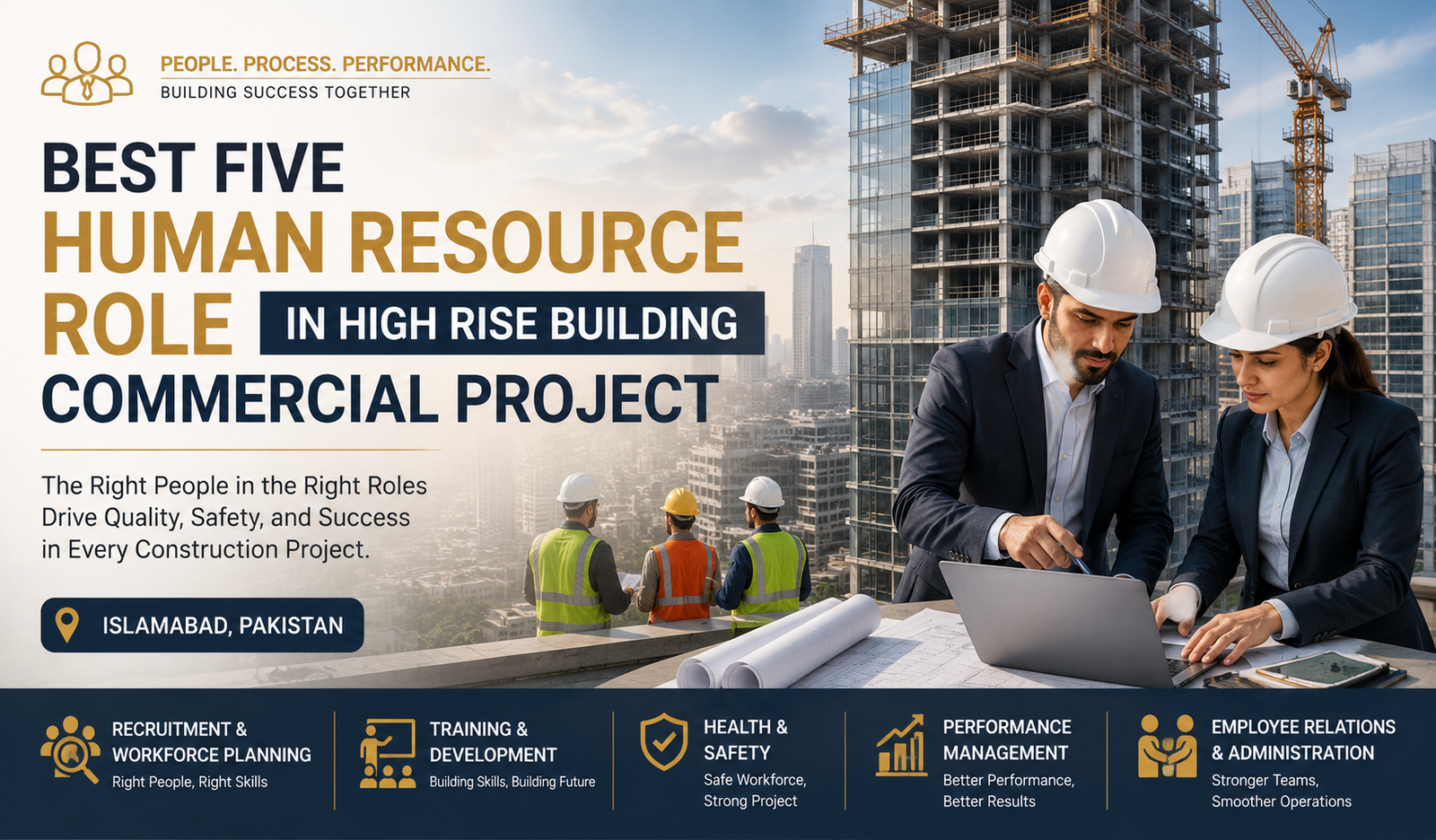
1. Recruitment and Workforce Planning
One of the most important HR responsibilities is ensuring that a project has the right people with the right skills.
A high-rise commercial project may require:
- Civil engineers
- Structural engineers
- Architects
- Project managers
- Site supervisors
- Quantity surveyors
- Electricians
- Plumbers
- Masons
- Carpenters
- Equipment operators
- Safety professionals
- Administrative staff
- Matching Skills With Project Requirements
HR teams work with project managers and department heads to understand workforce requirements at different construction stages.
For example, excavation and foundation work may require different specialists from those needed during interior finishing and building services installation. Proper workforce planning helps avoid both labor shortages and unnecessary staffing costs.
2. Employee Training and Development
Construction methods, equipment, safety procedures, and project requirements can vary significantly. HR plays an important role in organizing training programs that help employees understand their responsibilities.
- Training can cover areas such as:
- Workplace safety
- Equipment operation
- Construction procedures
- Site communication
- Quality standards
- Emergency response
- Professional conduct
- Technical skills
- Building a Skilled Workforce
A well-trained workforce can contribute to better productivity and more consistent work quality. HR can identify training requirements and coordinate programs with technical and safety teams.
Continuous development is particularly valuable in large projects where workers must adapt to changing construction phases and technologies.
3. Health, Safety and Employee Well-Being
Safety is one of the most important considerations on any construction site, particularly in high-rise building construction.
Although dedicated safety officers and site management typically handle technical safety responsibilities, HR can support the overall safety culture by ensuring workers receive appropriate training, documentation, communication, and support.
Supporting a Safe Work Environment
- HR responsibilities may include:
- Coordinating safety training
- Maintaining employee records
- Supporting safety awareness programs
- Managing worker onboarding
- Communicating workplace policies
- Supporting incident documentation
- Promoting responsible workplace practices
A strong safety culture requires cooperation between HR, management, workers, engineers, and safety professionals.
4. Performance Management and Team Coordination
A large commercial building project involves teams working on different tasks simultaneously. Effective performance management helps managers understand whether employees and teams are meeting project expectations.
HR can establish systems for:
- Employee performance reviews
- Attendance monitoring
- Productivity tracking
- Feedback
- Recognition
- Disciplinary procedures
- Workforce communication
- Improving Project Productivity
Clear responsibilities and regular communication can help employees understand what is expected of them.
HR can also work with project managers to identify workforce issues and support solutions when there are problems involving attendance, performance, communication, or staffing. This becomes particularly important as a high-rise project moves through multiple construction phases.
5. Employee Relations and Workforce Administration
Managing employee relations is another important HR function in commercial construction projects.
Large projects may involve permanent employees, temporary workers, subcontractors, consultants, and specialized contractors. Maintaining organized workforce records and clear employment procedures can help reduce administrative complications.
Managing the Workforce Efficiently
HR administration may include:
- Employee onboarding
- Attendance and leave records
- Payroll coordination
- Employment documentation
- Workforce policies
- Employee communication
- Conflict resolution
- Staff retention
- Offboarding
Effective employee relations can help create a more professional and stable workplace environment.
HR and Construction Management Working Together
Human resources cannot operate independently from the construction team. Successful project delivery requires close coordination between HR, project management, engineering, procurement, finance, contractors, and site management.
For example, when the construction schedule changes, workforce requirements may also change. HR must be able to respond to these changes by helping management recruit additional workers, reorganize teams, or arrange specialized personnel.
Workforce Planning Throughout the Project
A high-rise commercial building generally progresses through several stages, including:
- Planning and design
- Site preparation
- Foundation construction
- Structural development
- Building services installation
- Exterior and interior finishing
- Testing and commissioning
- Final handover
Each stage can require different skills and workforce levels. HR planning should therefore continue throughout the project rather than being limited to the initial recruitment phase.
The Importance of HR in Commercial Real Estate Development
For developers and construction companies, human resources is an important part of project management. A properly organized workforce can support productivity, communication, safety, and overall project coordination.
High-rise commercial developments represent significant investments, and delays caused by workforce shortages, poor coordination, or inadequate training can affect project schedules and costs.
Investing in people and effective HR systems can therefore complement investment in modern construction technology, quality materials, and professional project management.
Conclusion
The success of a high-rise commercial building project depends on the coordinated efforts of many professionals. Human resources helps provide the structure required to manage this workforce effectively.
The five key HR roles include recruitment and workforce planning, employee training and development, health and safety support, performance management, and employee relations and workforce administration.
When HR works closely with project management and technical teams, it can help create a skilled, organized, and productive workforce capable of supporting complex construction projects from planning through completion.
For developers and real estate companies, effective people management should be considered an essential part of delivering quality commercial buildings and long-term property projects.
Author Sadiqeen Group
Discuss this with our Sales Team
Speak directly with Sadiqeen Group about this article, available property options, current project information or a site visit.
Ask Sadiqeen