
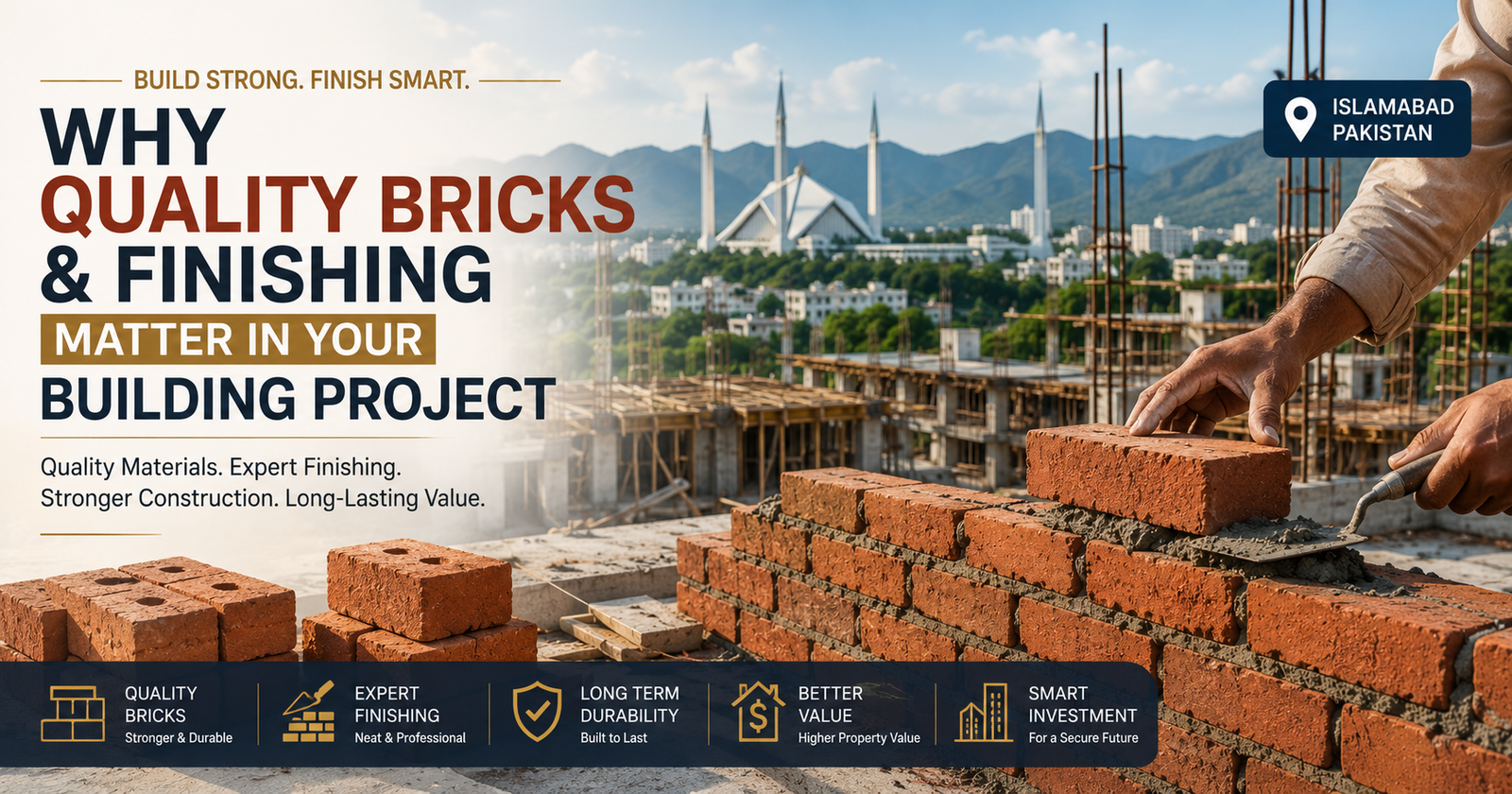
Why Quality Bricks and Finishing Matter in Your Building Project
Building a home or commercial property is a long-term investment. While location, design, and construction cost are important, the quality of construction materials and finishing work can have an equally significant impact on the durability, appearance, comfort, and value of a building.
Among the many materials used during construction, bricks form an essential part of walls and structural work, while finishing materials and workmanship determine the final appearance and functionality of the property. Choosing reliable materials and maintaining proper construction standards can help reduce future maintenance problems and improve the overall quality of a building.
Why Brick Quality Matters in Construction
Bricks are one of the most commonly used building materials in Pakistan. They are used extensively for walls, partitions, boundary structures, and other construction applications.
However, not all bricks offer the same level of quality. Differences in manufacturing, firing, density, dimensions, and material composition can affect their performance.
Strength and Durability
High-quality bricks can provide better resistance to normal wear, moisture, and environmental conditions. Strong and properly manufactured bricks can contribute to durable walls and reduce the likelihood of premature deterioration.
For a building project, selecting bricks from a reliable source is therefore an important part of maintaining construction quality.
Consistent Size and Shape
Bricks with relatively consistent dimensions make construction easier and help achieve more uniform walls. Consistent bricks can also reduce excessive mortar usage and make plastering and finishing work more manageable.
Poorly shaped or irregular bricks may increase construction time and can affect the final appearance of walls.
The Importance of Proper Brick Selection
Choosing construction materials should not be based on price alone. A cheaper material may appear attractive initially, but poor quality can potentially lead to additional repair and maintenance expenses later.
Before purchasing bricks, construction teams should consider factors such as:
- Strength and overall quality
- Proper firing
- Consistent dimensions
- Surface condition
- Water absorption
- Supplier reliability
- Suitability for the intended construction work
For larger projects, material quality should be checked consistently throughout the construction process rather than only at the beginning.
Why Finishing Quality Matters
Once the major construction work is completed, finishing gives a building its final character. Plaster, flooring, paint, doors, windows, ceilings, electrical fittings, bathroom fixtures, and other finishing elements all contribute to the overall quality of a property.
Good finishing is not simply about making a building look attractive. It also involves precision, functionality, durability, and attention to detail.
Better Appearance
Professional finishing creates a clean and refined appearance. Smooth walls, properly aligned tiles, well-finished corners, consistent paintwork, and quality fixtures can significantly improve the visual appeal of a home or commercial property.
For real estate projects, high-quality finishing can also create a stronger first impression for potential buyers and visitors.
Improved Functionality
Finishing materials are also responsible for many practical aspects of a building. Quality flooring should be durable and properly installed. Doors and windows should operate smoothly and provide appropriate insulation and security. Bathroom fixtures should be correctly installed to reduce the risk of leakage and other problems. Good finishing combines appearance with everyday usability.
How Quality Finishing Can Reduce Maintenance
Poor finishing can result in issues such as cracked plaster, uneven flooring, paint deterioration, water leakage, loose tiles, and damaged fixtures.
Although some problems may seem minor initially, repeated repairs can increase maintenance costs over time.
Using suitable materials and hiring skilled workers can help reduce the possibility of avoidable finishing defects. Proper surface preparation is particularly important before painting, tiling, or applying other finishing materials.
Quality Materials and Property Value
Construction quality can influence how buyers perceive a property. A well-built and properly finished home generally creates greater confidence than a property where materials and workmanship appear inconsistent.
For homeowners, quality construction can contribute to long-term comfort and usability. For property investors and developers, construction standards can also influence the property's marketability.
Construction Quality as a Long-Term Investment
Spending slightly more on reliable materials and skilled workmanship during construction may help avoid certain repair and replacement costs in the future.
This does not mean every expensive material is necessarily better. The objective should be to select appropriate, reliable, and properly tested materials that match the project's requirements and budget.
Brick Quality and Finishing Work Go Together
Good bricks alone cannot guarantee a high-quality building. Construction quality depends on the complete process, including masonry, mortar preparation, plastering, waterproofing, flooring, painting, electrical installation, plumbing, and final finishing.
Similarly, excellent finishing cannot completely compensate for poor underlying construction.
- A Complete Quality-Control Approach
- A quality-focused building project should pay attention to:
- Material selection
- Supplier reliability
- Proper storage of materials
- Skilled workmanship
- Correct construction techniques
- Regular quality inspections
- Proper surface preparation
- Waterproofing and moisture protection
- Final finishing inspection
- Timely correction of defects
Following these steps can help create a more durable and visually appealing property.
What Should You Look for Before Buying a Property?
If you are purchasing a newly constructed house, apartment, or commercial property, do not evaluate it only by its exterior appearance.
Look closely at the quality of construction and finishing. Check wall surfaces, flooring, doors, windows, bathrooms, paintwork, electrical fittings, plumbing, and visible masonry where possible.
You can also ask the developer or builder about the materials and construction standards used in the project.
Choose Quality for a Better Building
A building is more than its walls and exterior design. Quality bricks provide a reliable foundation for masonry work, while professional finishing transforms construction into a functional and attractive property.
Whether you are constructing a home, developing commercial property, or investing in real estate, paying attention to material quality and workmanship can make a meaningful difference over the long term.
At Sadiqeen Group, quality and attention to detail are important considerations when evaluating real estate and property opportunities. Buyers should always conduct proper due diligence and understand the construction specifications, materials, development standards, and documentation before making a property decision.
Author Sadiqeen Group
Discuss this with our Sales Team
Speak directly with Sadiqeen Group about this article, available property options, current project information or a site visit.
Continue on WhatsApp