Beat the Heat: Climate-Smart High-Rises
As cities in Pakistan grow vertically, high-rise apartments are no longer a luxury—they are a necessity. Yet many high-rise buildings suffer from one critical issue: uncomfortably high indoor temperatures during hot months.
At Sadiqeen Group and Sadiqeen Developers (Private) Limited, our experience as developers and engineers shows that indoor discomfort is rarely caused by climate alone. More often, it is the result of preventable design and planning choices.
Common Reasons High-Rises Get Hot
Ignoring sun direction during design planning
Walls with low thermal resistance
Poorly planned ventilation shafts
Excessive unprotected glass surfaces
Heat-absorbing roof slabs
These issues lead to higher temperatures, increased energy consumption, reduced living comfort, and long-term structural stress. The solution is engineering-led climate-smart design.
What Is Climate-Smart High-Rise Construction?
Climate-smart construction is the practice of designing buildings that adapt naturally to their environment. Instead of relying solely on air conditioning, these buildings use:
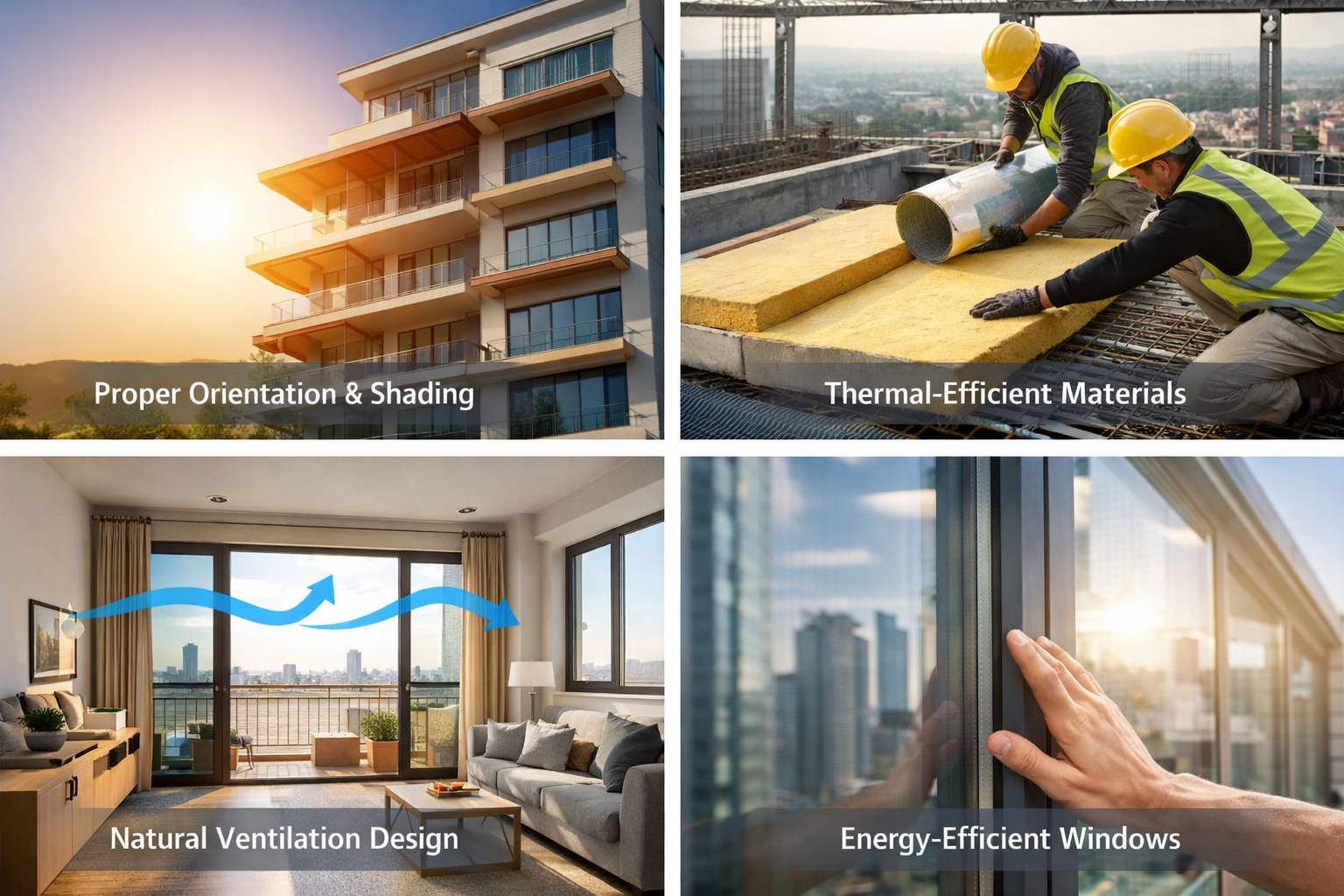
Intelligent orientation and shading
Natural airflow and ventilation
Thermal-efficient walls and roofs
Smart material selection and structural planning
At Sadiqeen Developers (Pvt.) Ltd., these principles are integrated from the earliest stages of design, ensuring comfort, efficiency, and long-term value.
Key Engineering Principles
1. Orientation & Sun Path Planning
Understanding the sun’s path is critical. Reducing west-facing exposure and using natural shading helps lower indoor temperatures without additional energy use.
2. Thermal-Efficient Structural Design
Walls and roofs act as the first barrier against heat. Proper wall thickness, insulated roofs, and heat-resistant concrete significantly reduce indoor heat absorption.
3. Natural Ventilation
Buildings must breathe naturally. Cross-ventilation, balanced airflow, and well-designed air shafts reduce heat buildup without relying on electricity.
4. Smart Façade & Window Design
Glass should provide daylight, not heat. Controlled window sizes, balcony shading, and suitable glazing maintain comfort while enhancing aesthetics.
Conventional vs Climate-Smart High-Rises
| Aspect | Conventional Buildings | Climate-Smart Buildings |
|---|---|---|
| Indoor Temperature | High | Comfortable |
| Energy Usage | Excessive | Optimized |
| Electricity Bills | High | Lower |
| Living Comfort | Seasonal | Year-Round |
| Long-Term Value | Average | Premium |
Benefits for Residents
Comfortable living even during extreme summers
Reduced electricity bills
Better indoor air quality
Long-term peace of mind
Value for Investors
Lower maintenance costs
High rental demand
Better resale value
Longer building life cycle
This is why investors trust Sadiqeen Group for high-rise projects that combine comfort, efficiency, and long-term value.
Our Approach at Sadiqeen Group
Site assessment and feasibility analysis
Climate-conscious design planning
Structural execution with high-quality materials
Integration of natural ventilation and energy-efficient features
Finishing and quality checks to ensure comfort
Consult Our Experts
If you are experiencing heat or ventilation issues, planning a new high-rise, or seeking expert guidance, Sadiqeen Group and Sadiqeen Developers (Private) Limited are available for consultation. Our teams provide practical solutions, project planning, and engineering advice to ensure your building stays comfortable and efficient.
Discuss this with our Sales Team
Speak directly with Sadiqeen Group about this article, available property options, current project information or a site visit.
Ask Sadiqeen
About the author
Syeda Bushra Bukhari is the Director Operations at Sadiqeen Group, a real estate marketing and developer company in Islamabad and Rawalpindi.
About Sadiqeen Group
Sadiqeen Group is a real estate marketing and developer company serving the twin cities of Islamabad and Rawalpindi, with its head office in G-13/1, Islamabad. Our articles follow our Editorial Policy. If you spot an error, our Corrections Policy explains how we fix it.